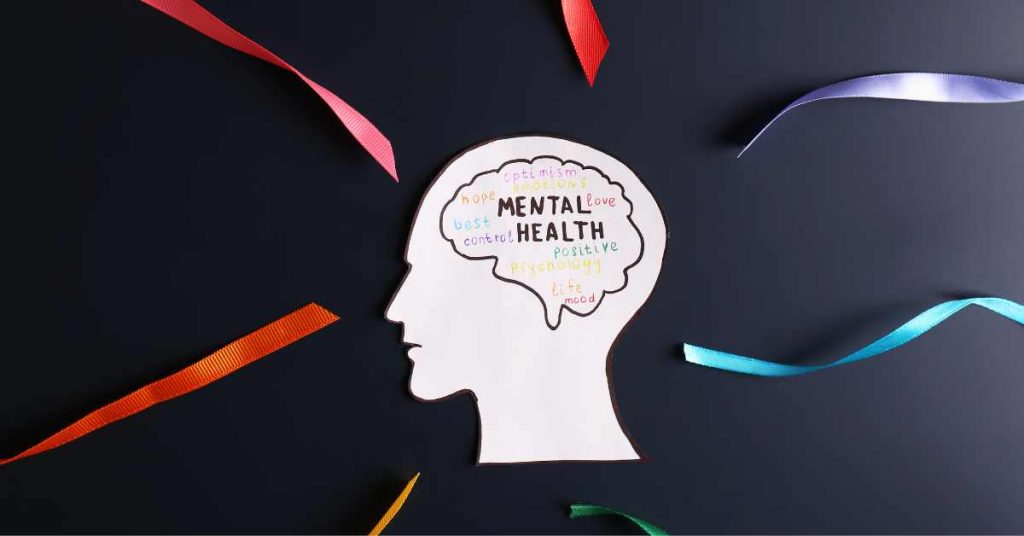
Breaking the Stigma: Gen Z and the Evolution of Mental Health Care

Not long-ago mental care was considered a taboo topic. Instead of taking the time to care  for those with a mental illness, governments would put patients in mental wards providing  inhumane conditions for the patients. However, this changed with Dorthea Dix, who stood up  to the futile conditions of mental wards patients. All this goes to say that we have come a  long way from not taking mental care seriously to it becoming one of the most concerning  subjects in the twenty-first century, especially with the rise of social media and increased  exposure to sensitive information we previously did not have. 

Gen Z and Mental Health Care Chatting Online

One segment of the population suffers from mental health issues significantly more than  their counterparts, Gen Z. When we take into consideration how this group of individuals  grew up, they did not know about life before the internet as did other generations. A lot of their  growing up involves connecting with friends via social media or through video chat. While  social media has its benefits, there seems to be more drawbacks when we consider the  original intention of it, connecting people together. There are three factors I would like to  cover that contribute to the mental health issue through social media: Fear of missing out  (FOMO), The illusion of choice, and self-comparison. First and foremost, FOMO. There is a huge social component behind this phenomenon. For example, when we see our friends  vacationing somewhere while we are working, we feel bad about missing out on the  opportunity of vacationing ourselves. One could perhaps take a break from social media to  not feel left out of such events, but there is no escaping this phenomenon entirely. Social  media is very prevalent in the twenty-first century, and it is where a majority of people get  their news content and other related information. Secondly, the illusion of choice. This  should not be taken lightly, as we have access to so much information that it can lead to increased stress. We would like to think having access to more information and therefore  access to more choices is better for us, but it can actually have a negative impact on our  mental health. Choice overload is tied in with the illusion of choice, which means that we have  access to so many choices that we can’t decide on what decision we want to make. Even after  one does make a choice, often they do not feel completely satisfied with their decision. Take for example job hunting on platforms such as Indeed or LinkedIn. Even if one does land a job  that aligns with their aspirations and career goals, there may be another company that offers  this to them plus better benefits and pay. Do we really feel a sense of clarity after making  decisions? In this age of constant information, it is hard to truly feel satisfied with the  decisions we make. Lastly, self-comparison. When we see our friends or others on social  media with houses, degrees, or relationship partners, there may be a general tendency to  compare our life situation with those we see on social media. We may even ask ourselves,  “What am I doing with my life”? after seeing posts about life accomplishments or success.  As the old adage goes, self-comparison is the thief of joy. A lot of us take for granted that  social media is used as a platform to highlight our successes and life accomplishments, which  can lead to a distorted perception of reality if that is all you see on your feed. 

Economic insecurity is a recent factor that is contributing to the declining mental health  of Gen Z. Research suggests that it has been significantly harder for Gen Z to find  employment after graduating college. Employers are reluctant to hire people from this  generation, claiming them as “unprofessional, poor communicators, and having a lack of  motivation.” This leaves students questioning the importance of a college education when  there are alternatives such as trade school, skills bootcamps, and earning income online.  However, this could lead to the phenomenon I mentioned earlier, the illusion of choice. Being 

that our economy is rapidly changing, placing importance on Artificial Intelligence and  Automation. A lot of our current jobs or trades may not be relevant within the next few years.  This leaves many concerned about their future and finding meaningful employment. A study  conducted by the American Psychological Association (2025) claims, “Around two-thirds of  employed adults (65%) reported that their company has been affected by recent government  policy changes.” Twenty-percent of these employed adults report “the impact has been  significant or drastic, requiring fundamental changes to their operation or strategy. 

The Emotional Toll of Fear of Missing Out (FOMO) – Mental Health Care Forum Blogging

FOMO has become a widespread experience among younger generations. It’s the feeling of exclusion when we see others enjoying experiences we’re not part of—like friends vacationing while we work or peers celebrating milestones we haven’t reached. Even if someone logs off social media, this sense of being left out lingers. Because digital platforms are where people consume news, trends, and social cues, opting out entirely can feel like opting out of life itself.
FOMO, driven by constant comparison, is a key trigger for anxiety and depression in digital natives. 

We do have a Mental Health Care Forums for people to post and blog online – we ask to act responsibly. There are various Mental Service Forum Topics to post about

The Illusion of Endless Choice

Another source of stress for Gen Z is the illusion of choice. With endless options for everything from careers to relationships, the overload of possibilities becomes paralyzing. Having many choices should, in theory, lead to empowerment. But in practice, it causes decision fatigue. Even after making a choice, there’s a lingering fear that a better one was left behind. Take job hunting, for example: finding a seemingly perfect position on LinkedIn can be followed by doubts once another “better” job appears online.
Choice overload fuels indecision, dissatisfaction, and long-term stress, especially in career planning.

Social Media and the Comparison Trap

Social media tends to highlight success stories—houses bought, degrees earned, relationships celebrated. This selective presentation often distorts reality. For a person scrolling through their feed, it may feel like everyone else is thriving while they’re falling behind. This fuels self-comparison and erodes self-worth. We often forget that social media is a curated highlight reel, not a reflection of real life.
Constant comparison to filtered realities can trigger low self-esteem and anxiety in vulnerable users.

The Weight of Economic Uncertainty

Adding to the pressure is economic insecurity. Research shows that Gen Z is struggling more than previous generations to secure meaningful employment after graduation. Employers sometimes criticize them as “unprofessional” or “unmotivated,” fueling feelings of inadequacy. Moreover, many young adults are questioning the value of a traditional college education as alternatives like trade schools and bootcamps become more viable—and sometimes more profitable. This again brings us back to the illusion of choice, where too many options create confusion instead of clarity.
Uncertain job markets and changing career paths add to Gen Z’s stress and mental health burdens. We have mental service forums for people to discuss various topics. 

Mental Health and the Rise of AI and Automation

The future of work is uncertain due to automation and AI, leaving many young people unsure whether their degrees or career paths will remain relevant. Constant shifts in job requirements and government policies make it difficult to plan long-term. According to the American Psychological Association (2025), 65% of employed adults say their company has been impacted by recent government policy changes. For 20% of them, the changes were drastic.
Future uncertainty about AI, careers, and policy changes is causing long-term anxiety in younger generations.

A Generation Seeking Help More Than Ever

While Gen Z faces increased mental health challenges, they are also more likely to seek help. Mental care is more accessible today than ever before. The COVID-19 pandemic accelerated the growth of telehealth, making therapy and mental care as easy as opening an app. This aligns well with Gen Z’s comfort with technology, creating a seamless experience for seeking help.
Digital-native Gen Z finds teletherapy accessible, affordable, and perfectly integrated into their lifestyle.

Breaking the Silence Through Social Media

In a surprising twist, social media—often cited as a contributor to mental health issues—has also helped destigmatize seeking help. Influencers, celebrities, and mental health advocates are using platforms like Instagram and TikTok to talk openly about therapy, depression, anxiety, and recovery. As a result, Gen Z feels less alone and more encouraged to get support. June, now widely recognized as Men’s Mental Health Month, receives far more coverage today than it did in 1994 thanks to these online movements.
Social media’s power to normalize therapy is helping break generational stigma around mental illness.

The Value of Mental Health Forums and Online Communities

Beyond therapy, online communities and mental health care forums are becoming safe spaces for discussion, support, and shared experiences. Platforms like MentalService.com offer moderated forums where users can post anonymously, engage with others, and receive guidance. These forums provide 24/7 access to peer support and act as an entry point for many who may be hesitant to book a therapy session.
Mental health care forums offer community, empathy, and guidance at any hour for anyone in need.

Join the MentalService Team and Make a Difference

If you’re passionate about mental health, now is the time to get involved. MentalService.com is looking for motivated individuals—students, advocates, creators, and professionals—to join our mission to promote mental wellness. Whether through writing, research, social media, or community moderation, there are many ways you can help break the stigma and bring real change.
Join our MentalService team to become part of a growing movement focused on mental wellness, education, and access.

While Gen Z suffers significantly more from mental health issues, there is an upside to it.  Gen Z seeks mental care more than previous generations. This may seem like a positive  correlation given that they suffer from it more, but there are other factors to consider that  influence them to seek professional help. For example, mental care is a lot more accessible  and affordable now. A positive that came put of the COVID-19 pandemic is the increase in  telehealth, especially mental care. You can now speak to a therapist with a tap on your phone  or a session on your computer. Not only does this make it easier to seek help, but it also makes it more accessible to all, especially Gen Z. When we consider A generation who grew  up on the internet, this provides a very good option for them as it would be integrated into  their daily lives. Another reason why Gen Z seeks mental care more than previous  generations is the increased awareness and openness in seeking help. This is actually an  example of social media being used in a positive manner to destigmatize the importance of  taking care of our mental health. For example, celebrities spread positive messages about  seeking professional care, which can lead many to believe it is a normal thing to experience  and thus seek help. June is men’s mental health month, which has been around since 1994.  However, the media coverage of it when it first came out is sparse compared to modern day. 

This can be attributed to the power of social media, which if used in a way to spread  positivity, can bring increased awareness to issues now just women face, but that all of us  face. Men are raised to ‘suck it up’ when they go through something emotional, but there are  various social media posts and groups who spread awareness of this being an actual issue for  men, such as the various men’s websites. 

Digital wellness apps are also a helpful resource for Gen Z and Millennials in particular. Platforms such as Headspace offer users meditation sessions, coaching, therapy, and psychiatric  services. Millennials can benefit from this service in particular because they are often  overworked and do not have the time or energy to set up appointments to meet with a therapist. This proves as a beneficial choice to them because of their preference of convenience given their  busy lifestyle. Integration of social features within digital wellness apps also serve millennials well given they are heavily embedded in social networks and provide motivation as well as a  way to keep themselves accountable. They are also considered a tech-savvy generation who is  used to using technology to manage different aspects of their lives. 

Not only are there shifts happening in the digital landscape, but there are also shifts  happening in the workplace. As Gen Z enters the workforce, they expect a culture that  expresses an openness and willingness in resources for mental health. However, this has led  to tension between previous generations such as Gen X and Millennials. Gen X prioritizes  practical solutions that improve work procedures and a work-life balance, whereas  millennials and Gen Z prioritize discussing mental health issues and having resources.  However, Gen Z takes a more radical approach when it comes to a workforce if they feel it  does not offer resources that meet their expectations. For example, if they feel the workforce  culture doesn’t prioritize mental health issues or if they can’t openly talk about their issues 

with their managers, they will leave that company for one that they feel does offer those  resources. This is a huge shift in demanding more from the workplace, which has led to  organizations prioritizing mental health resources.  

In conclusion, the evolution of mental care has changed dramatically. What was once not  considered a serious topic is now considered a serious public health issue in the digital age.  Given the economic insecurity, negative impacts of social media, and decline in life  satisfaction, Telehealth and digital wellness apps can be an effective choice in seeking mental  care as they can be integrated into one’s life seamlessly through their ease of use, reduced  cost, and convenience. Millennials and Gen Z lead the charge in demanding resources for  mental care through their jobs as well as in their daily lives, which has lead to an increase in  the usage of therapy and reduced stigma. 

Summary: A Call for Awareness, Empathy, and Action

Gen Z’s mental health challenges are real—but so is their courage. They are not afraid to speak out, seek help, and demand better mental care systems. With the rise of telehealth, mental health forums, and positive social media advocacy, we are better equipped than ever to support this generation and create lasting change. At MentalService.com, we believe mental wellness should be accessible, supported, and celebrated. Whether you’re struggling or simply want to learn more, know that help and hope are always within reach.
Let’s work together to support Gen Z and foster a world where mental care is not just accepted—but encouraged.

Related Articles